
Statistics for Women’s Role in Ghana’s Public Sector
June 8, 2026 · professional-development · 9 min read
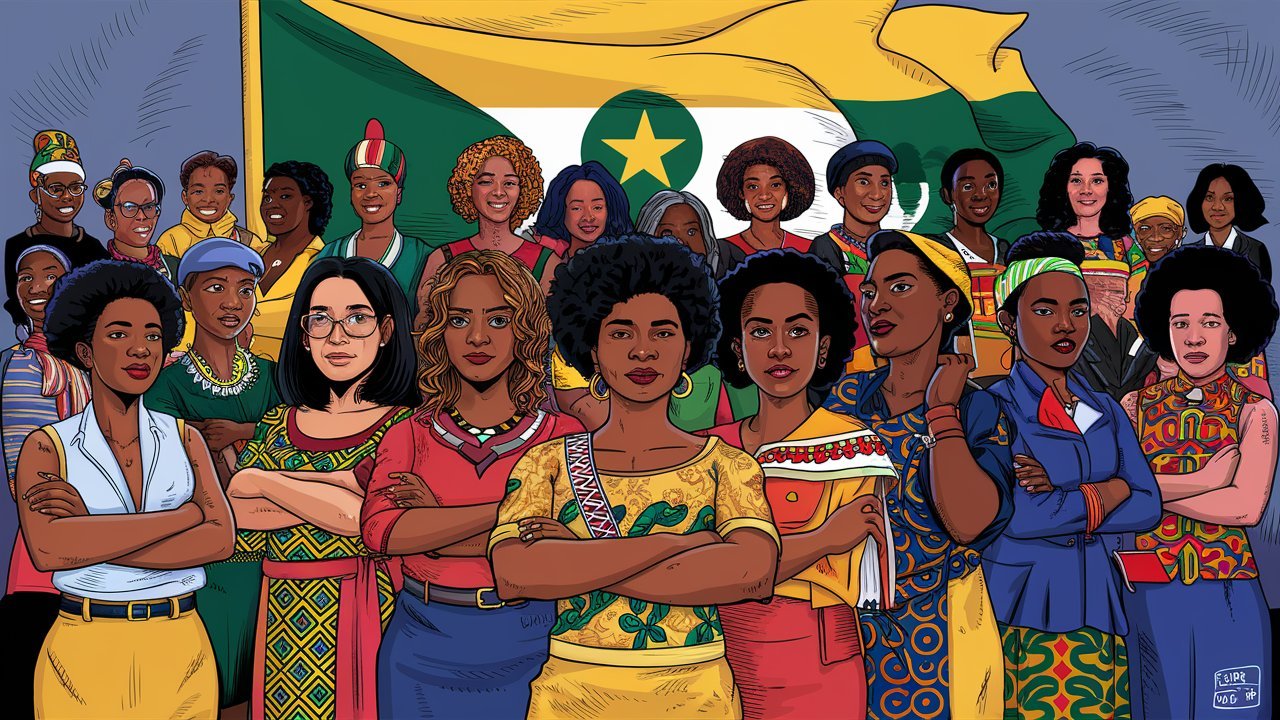
Women in Leadership
Women in Ghana’s Public Sector: The Data, the Progress and the Remaining Gaps
Ghana has made notable progress on women’s representation in public sector roles over the past two decades. The gaps that remain are structural, well-documented and addressable with deliberate policy and development investment.
Ghana’s public sector employs a significant proportion of the formal workforce and has historically been an important pathway to economic security and social mobility for Ghanaian women. The country’s political commitment to gender equity, reflected in the National Gender Policy and a series of gender-mainstreaming initiatives across government ministries, has produced measurable progress in female representation at various levels of the public service.
The overall picture is of genuine progress that has not yet reached the most senior levels. Women are well represented in the overall public service workforce estimates place female representation in Ghana’s public service at around 40% or slightly above. At senior management and leadership levels, representation falls significantly. The gap between entry-level and senior representation is the same structural pattern visible in public and private sectors globally, and in Ghana it has specific drivers that are well documented in the research.
Key Takeaways
- Women represent approximately 40% of Ghana’s public service workforce overall but are significantly underrepresented at senior management and leadership levels
- The most consistently documented barriers to senior advancement in Ghana’s public sector are differential access to professional development, informal network exclusion and the double burden of caregiving responsibilities
- Ghana has produced notable examples of women in senior public roles including Supreme Court justices and sector heads but these remain exceptions rather than a systemic pattern
- Professional development investment by Ghanaian public sector women produces strong career returns, particularly where it addresses applied management skills and leadership in hierarchical organisations
- The skills gaps most commonly identified among women advancing in Ghana’s public sector are in management, leadership navigation and professional negotiation addressable through targeted development
The Current State of Women’s Representation
Ghana’s public sector spans central government ministries and agencies, state-owned enterprises, the judiciary, the health sector, and public education. The patterns of female representation differ by sector. The health and education sectors, which employ large numbers of public servants, have relatively high female representation overall. Central government ministries and agencies show more mixed patterns. State-owned enterprises, which often carry higher salary levels and greater resource access than the general civil service, tend to show lower female representation particularly at senior levels.
The judiciary has produced notable women in senior roles Ghana has had female Supreme Court justices and has seen women in senior judicial positions in numbers that are meaningful by African regional standards. The police service and armed forces, by contrast, show much lower female representation and face specific structural barriers around physical requirements, deployment norms and cultural expectations that make advancement particularly challenging.
Structural Barriers to Senior Advancement
The most consistently documented barriers to women’s advancement to senior levels in Ghana’s public sector are not primarily about formal qualification. Women in Ghana’s public service are as well qualified at entry level as their male counterparts. The barriers emerge in the progression from junior to senior roles, and they are structural rather than individual.
Differential access to professional development. Public sector training budgets in Ghana, as in much of sub-Saharan Africa, are constrained. Access to the training opportunities that exist tends to be mediated by informal relationships and manager preference. Research on public sector training access in Ghana consistently documents that women receive fewer development opportunities than men at equivalent career stages, particularly for the high-visibility and senior-track development experiences that predict promotion to senior roles.
Informal network exclusion. The informal networks that shape public sector career outcomes in Ghana the relationships that determine who is recommended for roles, whose names come up in discussions about senior appointments are structured in ways that systematically advantage men. Women who have not been included in these networks from early career stages face compounding disadvantage as careers progress.
Caregiving double burden. Expectations around caregiving responsibilities for children and elderly relatives fall disproportionately on women in Ghana as in most societies. Public sector roles at senior levels carry demands in hours, travel, and the ability to be available outside standard working hours that create structural tension with caregiving responsibilities. In the absence of workplace flexibility policies and affordable childcare infrastructure, this tension tends to result in women deferring or declining advancement opportunities.
What Professional Development Can Do
For Ghanaian women professionals in the public sector, targeted professional development investment addresses several of the documented barriers to advancement. Management and leadership skills development builds the applied capability that formal qualification does not provide and that senior public sector roles require. Professional network building developed through training programmes that connect participants with peers and mentors partially substitutes for the informal networks that women are systematically excluded from.
The most valuable development for public sector women targeting senior roles in Ghana addresses management in hierarchical organisations, leadership navigation, professional negotiation, and the visible demonstration of strategic capability that senior appointment decision-makers look for. Matsh’s Women in Leadership course and Women Empowerment course are designed for exactly this: building the skills and confidence for senior leadership in African and Gulf organisational contexts, not adapted from Western corporate programmes that assume different organisational dynamics.
40%
Overall female representation in Ghana’s public service (Ghana Statistical Service)
15%
Estimated female representation at Principal Secretary level and above across Ghana’s civil service
37.9%
Women in Ghana’s parliament as of 2024, above sub-Saharan average but below Rwanda’s 61%
2015
Year Ghana adopted its National Gender Policy committing to gender mainstreaming across all public sector institutions
Professional Development for African Public Sector Women
Matsh’s Women in Leadership and Women Empowerment courses address the specific navigation challenges facing women in African public sector organisations. Not Western corporate frameworks. Built for African realities.
Data Deep Dive: What the Numbers Say by Sector
Disaggregating Ghana’s public sector data by sector reveals patterns that the overall 40% figure conceals. The health sector, driven by nursing and midwifery which are predominantly female professions, has female representation well above the national average. The education sector similarly. Law enforcement and the armed forces are heavily male, with female representation in the single digits in many units. The judiciary has made meaningful progress at senior levels with Ghana having had female Supreme Court justices, but the overall judiciary remains majority-male in practice.
The critical finding is the senior leadership gap across all sectors. Irrespective of the entry-level representation in any sector, the proportion of women at Director level and above consistently falls significantly below the proportion at officer and manager level. This is the universal pattern and it is as visible in Ghana as it is in the GCC.
Civil Service Specifics
Ghana’s civil service has a well-documented gender gap at the level of Principal and Deputy Director, the grades immediately below the most senior positions. Research by the Institute for Democratic Governance (IDEG) Ghana has documented that women represent approximately 35-40% of the civil service overall but fall to 20-25% at Director level and below 15% at Principal Secretary and above.
The gaps are structural and have persisted despite policy attention at the national level, including gender mainstreaming initiatives across ministries. The persistence suggests the barriers are more fundamental than policy awareness: they are embedded in how informal networks operate, how professional development opportunities are allocated, and how family responsibilities intersect with career advancement demands.
Ghana’s National Gender Policy: Commitment vs Reality
Ghana’s National Gender Policy, first adopted in 2015 and revised, commits to gender parity across government and calls for gender-responsive budgeting, gender-disaggregated data collection and gender mainstreaming across ministries. The gap between policy commitment and measurable outcomes on leadership representation reflects the same dynamic documented globally: policy statements without structural interventions in promotion processes and professional development access produce limited movement on actual senior representation metrics.
What Regional and International Experience Tells Us
Ghana’s situation is best understood in a regional context. Compared to other West African public sectors, Ghana performs reasonably well on overall female representation but comparably on the senior leadership gap. Rwanda’s exceptional parliamentary and public sector leadership representation demonstrates that rapid change is possible when political will creates structural incentives for it. South Africa has made stronger progress at senior public sector levels in specific departments than Ghana, through explicit senior-level targets with accountability.
The lesson from both cases is that the senior leadership gap in Ghana’s public sector is not an inevitable feature. It is the outcome of specific institutional choices about how promotion decisions are made, who is included in development opportunities, and what structural supports exist for women navigating family-career tensions at the senior level. Different choices produce different outcomes. This is demonstrated by regional variation within Africa as clearly as by the global evidence base.
For Ghanaian women in the public sector targeting senior advancement, the combination of targeted professional development and building the professional networks that provide the sponsorship function is the most consistent route to closing the advancement gap. Matsh’s Women in Leadership course and Negotiation Skills training are both designed for the specific dynamics of African professional contexts, not adapted from Western corporate settings. Related reading: our analysis of women in leadership globally provides the broader context for Ghana’s specific patterns.
Frequently Asked Questions
Build Leadership Skills for African Professional Contexts
Matsh’s Women in Leadership and Empowerment courses are designed for the organisational realities of African and Gulf institutions.
Need In-House Training?
We run all our courses as private programmes for organisations across the GCC and Africa.
Request In-House →